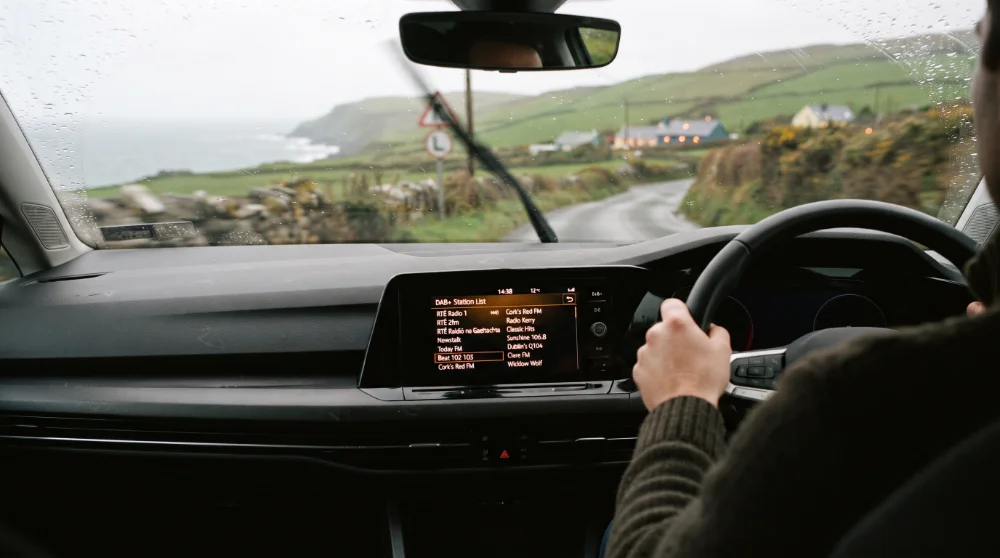
There has been seismic change in the digital radio landscape in Ireland in 2026. After years of uncertainty, false starts, and the high-profile withdrawal of RTÉ from the DAB platform in 2021, a new era has begun. The introduction of a high-powered DAB+ trial network operated by FáilteDAB, supported by the broadcasting regulator Coimisiún na Meán, has brought digital radio back to the Irish airwaves with a broader reach and a more diverse range of stations than ever before. For listeners wondering whether it is time to make the switch, or for those simply curious about what DAB+ offers, this guide sets out the current state of play in Ireland.
What Is DAB+ and How Does It Differ from FM?
DAB+ stands for Digital Audio Broadcasting Plus. It is the digital successor to the traditional FM analogue radio system. FM transmits a constant, analog signal which can be affected by interference, weather conditions and the distance from the transmitter. DAB+ transmits audio as a digital data stream.
This has several practical implications for listeners. The most immediate is sound quality. DAB+ provides a better quality of sound with less background hiss and interference, especially in areas of poor FM reception.It also means more efficient use of the radio spectrum, so one DAB+ multiplex can carry several stations in the same bandwidth that would previously have been occupied by one FM station.
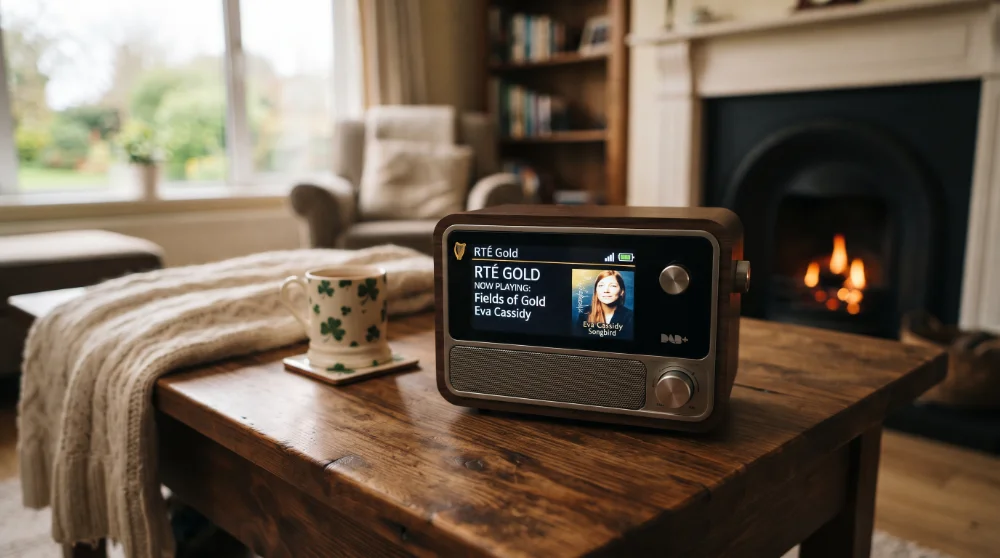
One of the key features of DAB+ is the possibility to send data together with the audio. This is why DAB+ radios can show the name of the station, the title of the song currently playing and even a small logo or image. Some receivers also support pause and rewind functions, allowing listeners to catch a moment they missed.
Crucially, DAB+ is not the same as the older DAB standard. DAB+ uses a more efficient audio codec (AAC) and provides better error correction. A DAB+ receiver will also receive FM, but a standard FM radio cannot receive DAB+. This is an important distinction for anyone considering a purchase.
The Return of DAB+ to Ireland: The FáilteDAB Trial
The story of DAB+ in Ireland is one of false starts. RTÉ operated a DAB network for several years, but in March 2021, the broadcaster announced it was ceasing transmission. A report commissioned by RTÉ found that just 0.5% of adults in Ireland listened to radio via DAB, while 77% listened on FM . The digital-only stations that RTÉ had operated, such as RTÉ 2XM and RTÉ Pulse, were also closed. For a time, it appeared that DAB radio in Ireland was effectively dead.
To see how the FáilteDAB trial performs in real-world conditions, you can watch Digital Radio DAB seems to be back in Ireland on YouTube:
That changed with the emergence of FáilteDAB, an independent operator that launched a new trial network with the support of Coimisiún na Meán and the spectrum regulator ComReg . The trial began in April 2025 and initially covered the greater Leinster area, carrying a mix of simulcast services from existing stations and new digital-only offerings .
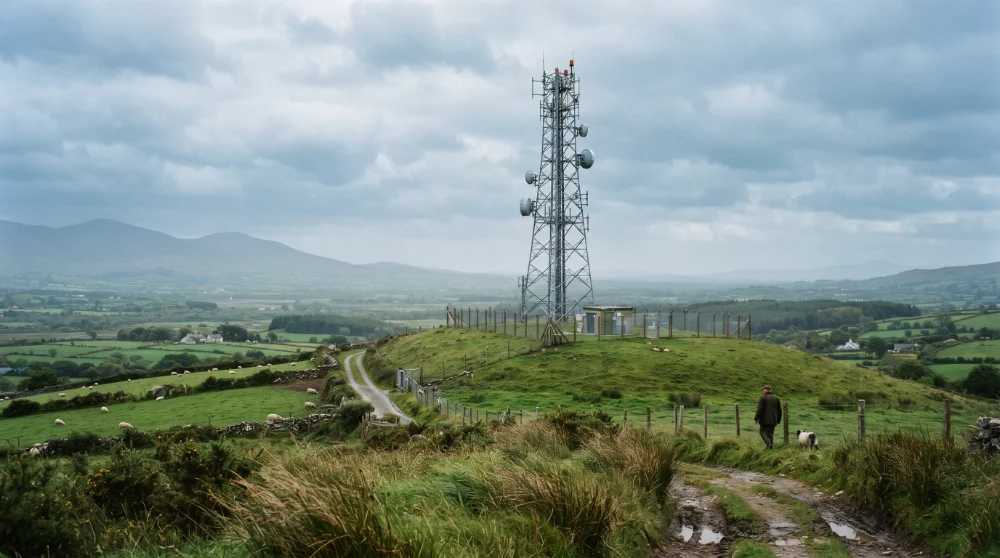
In February 2026, FáilteDAB announced a significant expansion. The existing trial network, FáilteDAB Mux 1, was extended for another twelve months, and a second network, FáilteDAB Mux 2, was launched in April 2026. This second multiplex was powered by up to nine additional high-powered transmission sites, strategically located to deliver coverage to parts of the North and South Midlands, the Southeast, Cork, Limerick, Clare, Galway, and Mayo . According to industry reports, the two networks together now cover approximately 80 to 85% of the Irish population .
What Stations Are Available on DAB+ in Ireland?
The expansion of the FáilteDAB network has brought a significant increase in the number of stations available on DAB+. At the time of the initial launch, twenty radio services were available, including simulcasts of existing stations and new digital-only services . By 2026, that number has grown to nearly thirty stations .
The available stations fall into several categories:
Simulcasts of existing stations. Several established Irish radio stations now broadcast on DAB+ alongside their FM output. Newstalk, for example, simulcasts its service on the digital platform . This allows listeners to access their favourite shows with the improved audio quality of DAB+.
Digital-only music stations. The trial has facilitated the launch of a range of niche and era-specific music services. Classic Hits 80s and 8Radio are among the stations available . Nova Xtra, a spin-off from the existing Nova brand, is also part of the lineup.
RTÉ Gold. In a notable development, RTÉ returned to the DAB+ platform in 2026 with its digital-only music station, RTÉ Gold. The station, which specialises in classic hits, had survived as an online-only stream after RTÉ closed its DAB network in 2021. Its return to terrestrial digital radio via the FáilteDAB network marks a significant shift in the public broadcaster’s approach .
Christmas FM and Rewind Radio. The seasonal charity station Christmas FM broadcasts on DAB+ during its festive run, and its sister station Rewind Radio occupies the DAB+ slot for the rest of the year .
The Regulatory Context: Coimisiún na Meán’s Position
The support of Coimisiún na Meán has been crucial to the revival of DAB+ in Ireland. The regulator has framed the trial as a way to expand the diversity of services available to Irish audiences and to test the technology’s potential benefits for both broadcasters and listeners .
Aoife MacEvilly, the Broadcasting and Video-on-Demand Commissioner at Coimisiún na Meán, stated that by supporting the trial, the regulator is demonstrating “our strong commitment to pluralism and diversity on Irish radio” . The trial has also been designed to facilitate a simulcast of existing radio services while allowing new services such as niche and era-specific music stations, as well as new speech programming covering genres such as social affairs, sports, youth-targeted topics, and children’s entertainment .
It is important to note that DAB+ is not currently intended as a replacement for FM. The regulatory approach in Ireland has been cautious, learning from the earlier failed attempt to establish DAB as the primary platform. The trial is exactly that—a trial—and there has been no announcement of a mandatory digital switchover. FM remains the dominant platform for radio listening in Ireland, and it is likely to remain so for the foreseeable future.
Do You Need a New Radio to Receive DAB+?
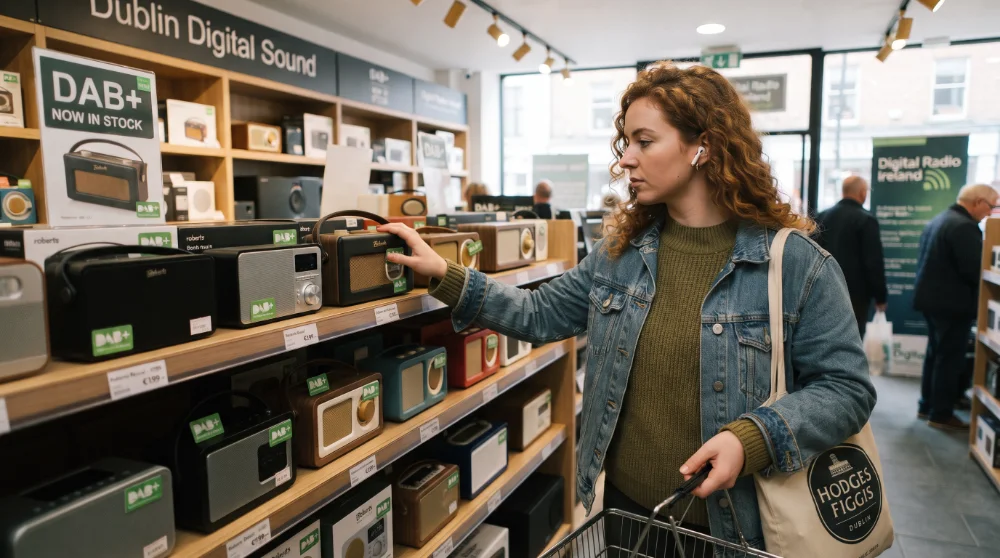
Yes. A standard FM radio cannot receive DAB+ signals. To listen to DAB+ stations, you will need a radio that is explicitly labelled as DAB+ compatible. These are widely available in Ireland, from budget models to high-end receivers.
The good news is that most DAB+ radios also include FM reception. This means you can use a single device to listen to both digital and analogue stations, switching between them as you wish. Many newer models also include internet radio capability, allowing you to access thousands of stations from around the world via your home Wi-Fi network.
Prices vary considerably. Entry-level portable DAB+ radios can be purchased for under €100, while more advanced models with features such as Bluetooth, internet radio, and premium speakers can cost several hundred euros. Examples available on the Irish market include the Roberts Revival iSTREAM, which combines DAB+, FM, and internet radio with Bluetooth connectivity, and the Imperial Dabman i200, a more affordable FM/DAB+/internet radio option .
When purchasing, look for the DAB+ logo specifically. A radio labelled only as “DAB” may not be compatible with the DAB+ standard used in Ireland.
Coverage: Can You Get DAB+ Where You Live?
Coverage is the most important practical consideration for anyone considering DAB+. The FáilteDAB network has expanded significantly, but it is not yet national.
Based on the rollout plans, the following areas are covered or will be covered by the trial networks:
Leinster and Dublin: The original Mux 1 network covers Dublin, Meath, Wicklow, Kildare, Westmeath, Longford, Laois, and Wexford .
Mux 2 expansion: The second network extends coverage to parts of the North and South Midlands, the Southeast, Cork, Limerick, Clare, Galway, and Mayo .
If you live in an area outside these regions, you may not be able to receive DAB+ signals reliably, if at all. Before purchasing a DAB+ radio, it is worth checking the FáilteDAB website or asking a local retailer about coverage in your specific area.
The Advantages of DAB+ for Listeners
For those who can receive it, DAB+ offers several clear advantages over FM.
More stations. The most obvious benefit is the increased choice. The FáilteDAB trial has brought nearly thirty stations to the platform, including music services that are not available on FM .
Better sound quality. DAB+ provides clearer audio with less interference. This is especially true in areas of poor or distorted FM reception.
Further data.A good feature that makes listening more fun is the ability to see station names, song titles and other information on the radio’s display.
Easy to tune . DAB+ radios automatically scan for available stations and tune to them, showing a list of stations.No need to remember frequencies or manually search the dial.
The Limitations and the Road Ahead
Despite the progress, DAB+ in Ireland still faces significant challenges. The most fundamental is that the vast majority of radio listening in Ireland remains on FM. The 0.5% DAB listenership figure that contributed to RTÉ’s decision to close its network in 2021 has not been dramatically transformed, although the expanded coverage and increased station choice are intended to change that over time.
The trial status of the FáilteDAB network is also a limitation. The networks are licensed on a trial basis, and there is no guarantee that they will become permanent. A public consultation on a new Broadcasting Services Strategy, launched by Coimisiún na Meán in late 2026, will help to shape the long-term regulatory approach to digital radio .
For listeners, the decision of whether to invest in a DAB+ radio depends on where they live and how much they value the additional stations and improved audio quality. For those in covered areas who enjoy the expanded choice, DAB+ is a worthwhile addition. For those outside coverage, or for whom FM remains sufficient, there is no immediate need to switch.
Conclusion
DAB+ in Ireland in 2026 is in a state of active development. The FáilteDAB trial has brought digital radio back to the Irish airwaves with expanded coverage, a growing list of stations, and the backing of the broadcasting regulator. It is no longer accurate to say that DAB+ is dead in Ireland. But it is equally inaccurate to say that it has replaced FM. The platform is in a transitional phase, and listeners have more choice than ever before, provided they are in the right location and have the right equipment. The coming years will determine whether DAB+ becomes a permanent and significant part of the Irish radio landscape, or remains a supplementary service for a niche audience.