How Ireland Is Listening in 2026
DUBLIN – Irish radio was never just background noise. It is the sound of the breakfast table, the commute, the lunch break, the drive home. For generations, it has been the thread that connects households, communities and the wider nation. But the way we tune in has shifted.
In 2026, more Irish people than ever are listening to the radio through their phones, laptops and smart speakers. The kitchen radio still has its place. But the future of Irish radio is online, and it is already here.
The Numbers Behind the Shift
The latest Listen Up Ireland research from IAB Ireland paints a clear picture. Digital audio now reaches 76% of Irish adults every week. That is over three million people . Among 16 to 34 year olds, the figure rises to 96% .
But here is the part that matters for radio specifically. When you combine traditional FM with digital audio, the total weekly reach climbs to 92% of all adults . Digital audio adds an extra 12% of listeners who would not be reached by FM alone . The two platforms are not competing. They are working together to bring radio to more people than ever before.
Time spent listening has also grown. Irish adults now spend 12.6 hours per week with digital audio. That is a 7% increase year on year, and it puts digital audio on par with live television as the joint leading channel for weekly media consumption . Among active digital audio listeners, the figure rises to 16.6 hours per week . These are COVID-era levels of engagement, and the growth is being driven by younger demographics .
Radio Itself Is Not Going Anywhere
It would be easy to read those digital audio figures and assume traditional radio is fading. The data says otherwise.
According to the latest JNLR figures, 3.46 million people tune into radio every weekday in Ireland . Weekly reach stands at 89% of the adult population . Live radio accounts for 74% of all audio listening time, far ahead of music streaming and podcasts .
The headline act remains RTÉ Radio 1. The station reaches 1,354,000 listeners every week . Morning Ireland is still the most listened to radio programme in the country, with 457,000 listeners tuning in each morning . Today with David McCullagh follows with 422,000 listeners .
RTÉ holds the entire top ten most listened to radio programmes in Ireland, and 16 of the top 20 . That is dominance by any measure.
But other stations are making gains. Today FM now reaches 974,000 people every week, with its market share climbing to 10.0%, the highest in over a decade . The Ian Dempsey Breakfast Show has hit record numbers at 240,000 listeners . The Last Word with Matt Cooper is at its highest level in over 15 years with 195,000 listeners .
Onic’s urban stations are also performing strongly. FM104 reaches 261,000 Dubliners weekly. Q102 reaches 166,000. In Cork, 96FM has a 16.3% prime time market share. Live 95 in Limerick commands 23.1%, and LMFM in the north east holds 29.7% .
Why Online Radio Matters for Irish Listeners
The shift to online listening is not just about convenience. It changes what is possible.
Traditional FM radio is limited by geography. A station broadcasts to a specific area, and that is that. Online radio removes those borders. A listener in Donegal can tune into a Cork station. An Irish person living in London can start their morning with Morning Ireland. Someone in New York can keep up with the sounds of home.
Radio aggregator apps have made this easier than ever. Instead of searching for individual station streams, listeners can open a single app and access hundreds of Irish radio stations. Easy Radio Ireland is built on this simple idea: one place for all the Irish radio you want, wherever you happen to be.
The Listen Up Ireland research shows that online radio accounts for 4% of total media hours among digital audio listeners, with radio aggregators adding another 2% . That may sound small, but it represents a significant and growing share of listening time. And it is a share that is likely to grow as more people discover the ease of streaming.
Community Radio: The Local Voice That Online Listening Amplifies
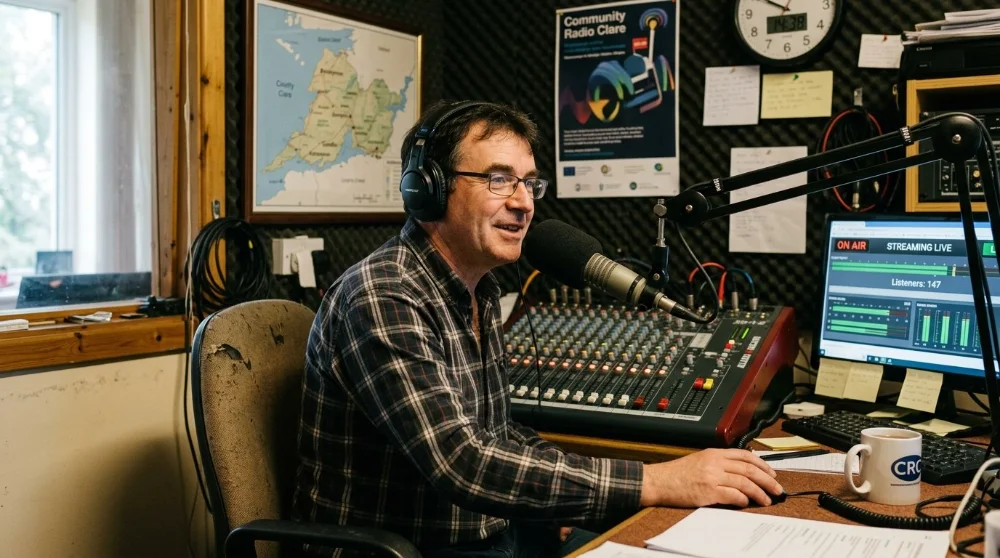
One of the most distinctive features of Irish radio is the strength of its community stations. These are not commercial operations chasing big audiences. They are local services run by volunteers, for their own communities.
CRAOL, the community radio network, represents 21 fully licensed stations and 15 developing ones . These stations involve more than 2,100 volunteers broadcasting over 175,000 hours of unique local content every year . They cover 11 of the 26 counties, reaching 40% of the national population .
Stations like Athlone Community Radio, Claremorris Community Radio, Connemara Community Radio, Dublin City FM, Near FM and Phoenix FM serve their areas with a focus that national broadcasters cannot match. They cover local news, local sports, local issues. They give a platform to voices that would otherwise go unheard.
Before online listening, these stations were only available within their broadcast radius. Now they can be heard anywhere. A person from Connemara living in Dublin can stay connected to home. A community group can share its work with a wider audience. Online radio gives community broadcasting a reach it never had before.
The Technology That Made It Happen
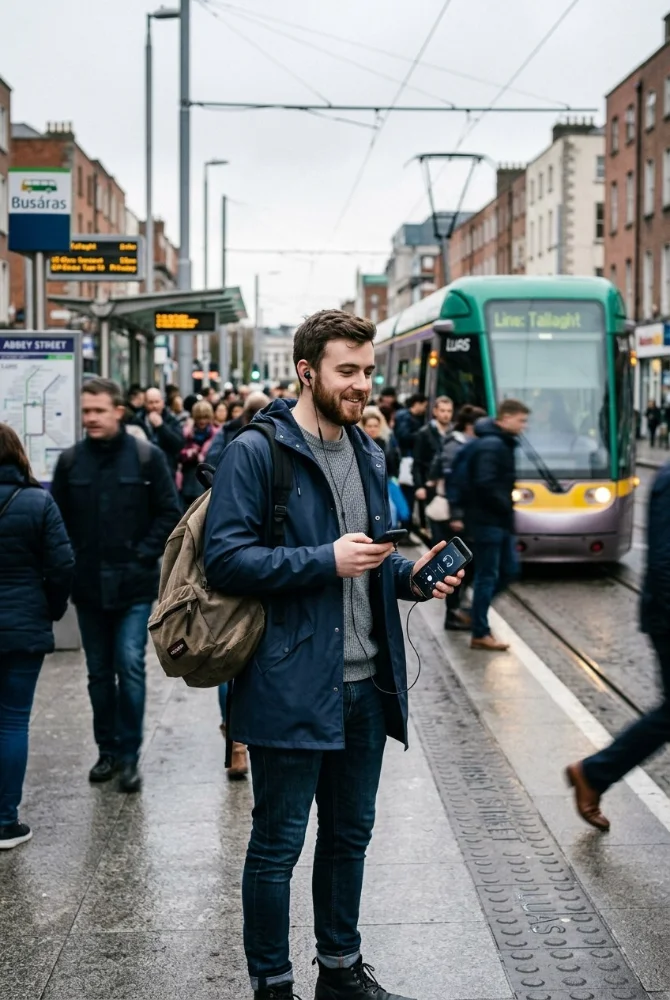
The smartphone is the main device driving this change. According to the Listen Up Ireland research, 75% of digital audio listeners use their phone to tune in . Among younger listeners, that figure is even higher .
But other devices matter too. Connected cars are the second most used device for digital audio, despite a slight easing following last year’s spike . Smart speakers and internet radio devices are more popular among older listeners .
This multi-device reality means radio fits into daily life in ways that were not possible before. You can start a programme on your phone during the commute, continue it on your smart speaker while making dinner, and finish it on your laptop at home. The listening experience is no longer tied to a single device in a single room.
What Listeners Are Doing While They Listen
The research also reveals when and how people listen. Digital audio fits into everyday moments. Men are more likely to listen while working. Women are more likely to listen while washing or dressing. Younger listeners tune in while commuting, studying or exercising. Older listeners prefer to listen while relaxing .
Driving, household chores and relaxing are the top activities that accompany listening . This tells us something important: radio is not something people stop to do. It is something they do alongside everything else. That is its strength. It does not demand your full attention. It is there, in the background, in the foreground, whenever you need it.
The Advertising Picture
For anyone interested in the business side of radio, the Listen Up Ireland data offers encouraging signs. Digital audio ranks second for claimed attention to advertising across all media channels, behind only cinema. It scores 35%, ahead of live TV at 32% and social media at 29% .
Trust in digital audio advertising stands at 41%, in line with traditional trusted media . One in five listeners have taken action based on a podcast ad, rising to three in ten among 16 to 34 year olds .
For radio specifically, trust in advertising on live or catch-up radio online is at 41%, up two percentage points year on year . This matters. It shows that online radio is not seen as a less trustworthy version of FM radio. It is trusted in its own right.
Challenges on the Horizon
The Irish radio industry is not without its pressures. In May 2026, Onic, which operates FM104, Q102, 96FM, C103 and LMFM, entered a consultation process that could lead to job losses . A company spokesperson said the media environment is challenging, and the focus is on digital transformation and operational efficiency .
This reflects a wider reality. Traditional broadcast models face financial pressure. Advertising revenue is spread across more platforms. Young audiences consume media differently. The transition to digital is necessary, but it is not painless.
For listeners, these changes may mean some stations adjust their output or their schedules. But the fundamental demand for radio – for voices, for stories, for company – remains strong. The challenge for the industry is meeting that demand in a way that is financially sustainable.
Why We Built Easy Radio Ireland
We built Easy Radio Ireland because we believe Irish radio should be easy to find and easy to listen to, no matter where you are.
The technology exists to bring hundreds of Irish stations to your device. The demand is clearly there. Three million people listening to digital audio every week is not a niche. It is the mainstream.
But finding the right stations can still be a hassle. Different apps, different websites, different streams. We wanted to simplify that. One place. All the Irish radio you want. From RTÉ to community stations, from news to music to sport.
The Listen Up Ireland research shows that radio aggregators account for 2% of digital audio listening time . We think that number should be higher. The content is there. The audience is there. The only thing missing is a simple way to connect the two.
What the Future Holds
The direction of travel is clear. More listening will happen online. More devices will be connected. More stations will stream their output. The line between FM and online radio will continue to blur.
For Irish listeners, this is good news. More choice. More flexibility. More ways to stay connected to the voices and sounds that matter to them.
For the radio industry, it means adaptation. The stations that thrive will be those that meet listeners where they are, on the devices they use, at the times that suit them. The ones that treat online listening as a core part of their service, not an afterthought.
For community radio, online distribution is a gift. Stations that once served a few thousand people within a limited radius can now reach anyone with an internet connection. The local voice becomes a national and international voice, without losing what made it local in the first place.
And for listeners, the simple pleasure of turning on the radio remains unchanged. Whether it comes through a kitchen speaker or a phone in your pocket, it is still the same thing. A voice. A song. A story. A connection.
How to Start Listening
If you have not tried online radio yet, starting is simple. You need a device with internet access and a way to listen.
A smartphone is the easiest option. Download an app, find your station, press play. That is it. No subscription, no complicated setup, no technical knowledge required.
If you want to listen on your computer, most stations stream directly from their websites. And if you have a smart speaker, you can usually ask it to play a station by name.
The range of stations available is vast. You can start with the big names – RTÉ Radio 1, Today FM, Newstalk – and then explore. Look for local stations from your area. Try a community radio station. Browse by genre, by county, by interest.
You will find news, music, sport, talk, comedy, drama, documentaries. You will find voices that sound like home. You will find something you did not know you were looking for.
That is the thing about radio. You do not always know what you want until you hear it. And with online listening, it is always there, waiting for you to press play.
Easy Radio Ireland is your home for Irish radio online. Find your station, wherever you are.
Related Posts
RTÉ Radio 1: Ireland’s Home for Sports Broadcasting
A complete profile of the national broadcaster's sports output RTÉ…