How a Decade of Pirates Changed Irish Broadcasting Forever
The 1980s were a strange time for radio in Ireland. If you wanted to hear the music you actually liked, you often had to break the law to do it. That is not an exaggeration. For most of the decade, the only legal radio in the country was RTÉ. Everything else, the pop music, the chart hits, the local news and death notices, came from pirate stations broadcasting without a licence.
At its peak, there were more than 100 pirate stations operating across Ireland . They were in Dublin, Cork, Galway, Limerick, Waterford, and dozens of smaller towns. They played the music that RTÉ would not play, or would not play enough of. They gave young people a voice on the airwaves. And then, on New Year’s Eve 1988, almost all of them went silent at the same moment.
This is the story of that decade. It is also a guide to where you can still hear that music today.
How the Pirates Took Over
The story starts before the 80s. In the 1960s, offshore pirate stations like Radio Caroline had broadcast pop music into Britain from ships in the North Sea. Ireland had its own pirate tradition too, going back to the 1970s with stations like Radio Dublin and ARD .
But the 1980s were different. A legal gap made it possible for land-based pirates to operate with relative freedom. The government had not yet set up a proper licensing system for independent radio. The result was an explosion of stations.
By 1988, listings from radio enthusiasts counted around 100 pirate stations operating across the country . The bigger ones were in Dublin. Radio Nova, Sunshine Radio, Q102, and Energy 103 were professional operations with proper studios, professional presenters, and large audiences. Radio Nova was often described as the most professional of them all, with presenters who later moved into legal radio and stayed there for decades .
These stations were not just playing music. They were building a new kind of radio culture in Ireland. They hired young presenters who had grown up listening to pop music. They created fast-paced shows with chat, competitions, and listener phone-ins. They gave people in Cork, Galway, and Waterford something that sounded like it belonged to them, not to Dublin 4.
The Music That Mattered
What were the pirates playing? The answer is simple: everything that was popular. The 1980s were a remarkable decade for music. Synth-pop, new wave, power ballads, hair metal, early hip-hop, and the rise of MTV all happened in those ten years. The pirates played all of it.
But they also played songs that never made the charts. A thread on an Irish football forum from years later listed some of the tracks that were staples of pirate playlists but never became hits . Songs like “In The Army Now” by Bolland, “Guardian Angel” by Masquerade, and “When Sly Calls” by Michael Franks. These were album tracks and minor releases that the pirates played because they sounded good, not because a chart told them to.
That is what made pirate radio special. It was not programmed by committee. It was programmed by people who loved music and wanted to share it. In Waterford, ABC Radio played non-stop contemporary music with what one listener remembered as “class DJs” . In Dublin, Nova and Sunshine built playlists that sounded fresh and exciting compared to the more cautious output of RTÉ.
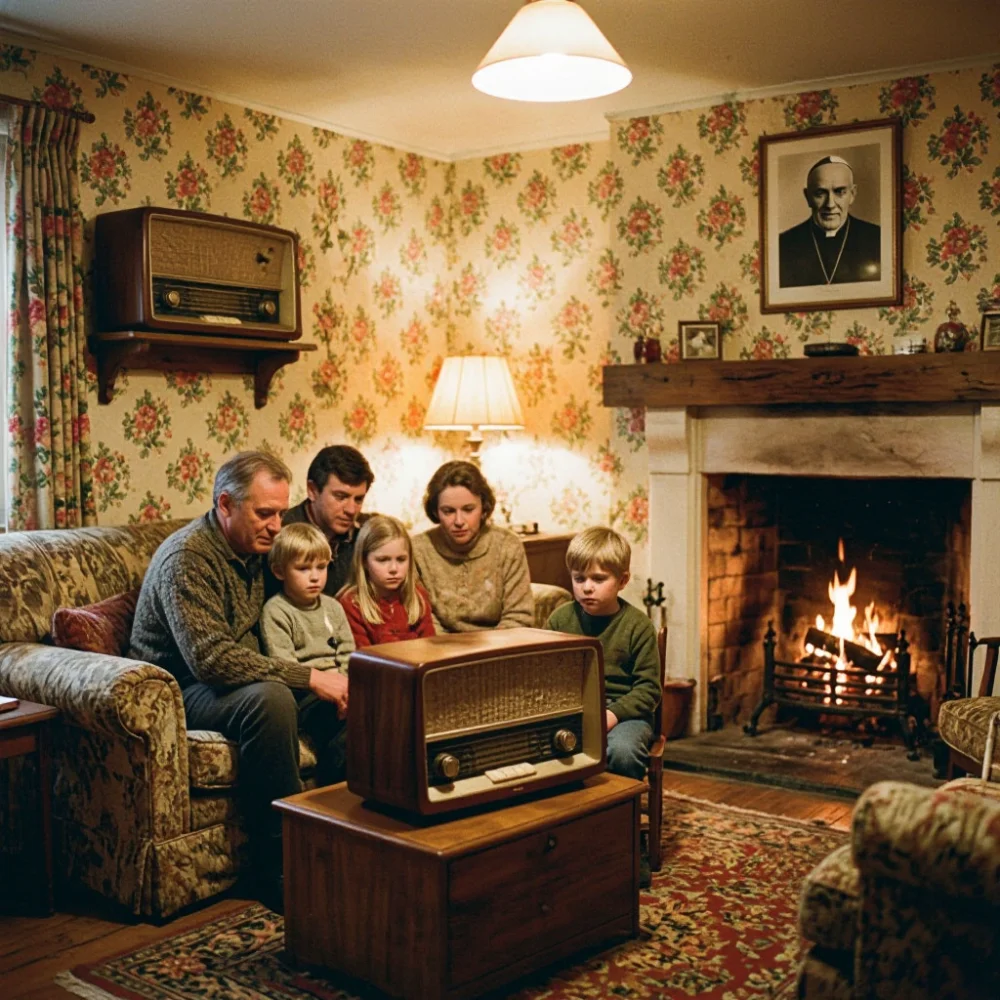
RTÉ did have its own pop station. Radio 2 launched in 1979 with a chart music format . By 1985, getting on the Radio 2 playlist was almost a guarantee of success for a record . But RTÉ also had rules. The RTÉ Authority directed that there should be an hour of Irish-produced records on the playlist. A weekly meeting of producers decided which Irish music made the cut .
That approach had its merits. It gave airtime to Irish folk and ballad acts like Paddy Reilly, The Fureys, and The Wolfe Tones . But for young listeners who wanted the latest chart hits, the pirates offered something RTÉ could not: speed, freedom, and a sense that the station was on their side.
The Closedown
By the late 1980s, the writing was on the wall. The government was preparing to introduce a new licensing system for independent radio. The Independent Radio and Television Commission was established in 1989 . The message to the pirates was clear: shut down by the end of 1988 and you might get a licence. Stay on air and you definitely will not.
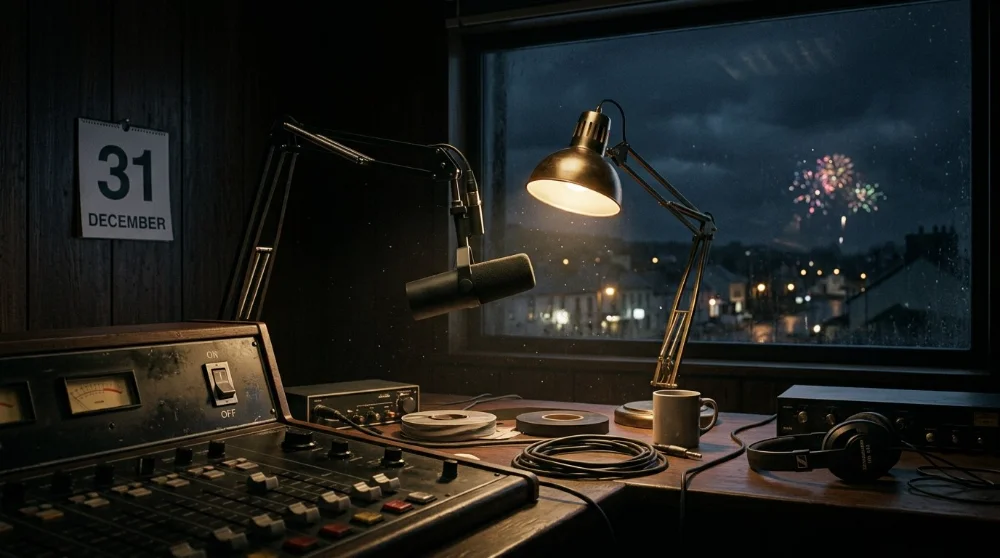
On New Year’s Eve 1988, an estimated 70 pirate stations across Ireland closed down voluntarily . It was the end of an era.
The people who worked at these stations remember it as a deeply emotional night. Paul Claffey of Midwest Radio in Mayo described it as “like a wake, a bereavement” . His station broadcast its final show from the Midas club in Ballyhaunis, with Declan Nerney and his band playing live. At midnight, the signal went dead. Silence in the west .
At Sunshine Radio in Dublin, the mood was different. The station had been on air since 1980 and was confident it would get a licence. It did not. Shelagh O’Donnell, the office manager, remembered “the weeping and gnashing of teeth” . Presenter Robbie Robinson gave what was described as a “state-of-the-nation address” on air, telling listeners that his eight years at Sunshine were “the most wonderful time of my life” . Then the station faded into silence to the sound of Simon and Garfunkel’s “Bridge Over Troubled Waters.”
For many of the young people who worked in pirate radio, the experience had felt “glamorous and idealistic” . They were part of something new. They were making radio that their friends actually wanted to hear. And then, suddenly, it was over.
The 80s Stations You Can Still Hear Today
The pirates are gone. But the music they played is not. If you want to hear the sound of the 1980s on the radio today, you have options. Some are Irish. Some are online. All of them keep the decade alive.
Ireland’s Classic Hits Radio: The Home of the 80s and 90s
Ireland’s Classic Hits Radio is the biggest 80s-focused station in the country. It broadcasts to Dublin, Cork, Limerick, Galway, Kildare, Meath, Wicklow, and Clare on FM, and nationwide through smart speakers and its own app .
The station describes itself as “The Home of the 80s & 90s in Ireland” . Its programming director, Dave Kelly, has watched the station grow into a major player. In late 2025, it reached a 6.5 percent market share across the multi-city area, with 373,000 weekly listeners and 207,000 daily listeners . It is now the number one music radio station in that area on weekends .
For anyone in Cork who grew up with 80s music, this is the easiest place to find it on FM. The playlist covers the big hits and the songs you had forgotten you loved.
Classic Hits 80s: A Dedicated Decade Channel
If you want nothing but 80s music, Classic Hits 80s is for you. This is a spin-off service from Ireland’s Classic Hits Radio, available on DAB+ digital radio in the Leinster area through the FáilteDAB trial .
The station has been tested on FM around the country on four occasions. Kevin Branigan, CEO of Classic Hits, said the listener reaction was “great” each time . The plan is to develop Classic Hits 80s further and bring “the Home of 80s in Ireland” to a wider audience .
For now, it is a digital-only service. But if you have a DAB radio in the Leinster area, you can hear it. And if the station’s track record is anything to go by, it may not stay digital-only forever.
Nova 80s: The Spirit of Pirate Radio Lives On
There is something fitting about the fact that Radio Nova, one of the great Dublin pirates of the 1980s, is now the home of an 80s music service. Nova 80s plays what the station calls “the greatest 80’s music from the decade that brought so much” .
The station runs a show called “Friday Night 80s with Dee Woods,” which airs from 7pm to 10pm . It is a straightforward offering: three hours of 80s music to start your weekend.
What makes Nova 80s interesting is the connection to history. Radio Nova was one of the stations that shut down on New Year’s Eve 1988 . It came back as a legal station years later. Now it runs a service dedicated to the decade when it was a pirate. There is a kind of poetry in that.
8Radio: An Alternative Voice
8Radio is another station available on the FáilteDAB digital multiplex . It is not exclusively an 80s station, but its alternative music format means it plays plenty of 80s new wave, post-punk, and indie tracks that you will not hear on the mainstream 80s stations.
For listeners who remember the more adventurous side of 1980s radio, when pirates would play The Cure, Siouxsie and the Banshees, and other alternative acts alongside the chart hits, 8Radio offers something closer to that spirit.
Online Options from Further Afield
If you want to go beyond Irish stations, there are plenty of online options playing 80s music around the clock.
1000 HITS 80s is a San Francisco-based station with a huge library of 80s pop, new wave, rock, and dance . Amazing 80s from New York focuses on chart-topping pop and new wave classics . SomaFM Underground 80s goes deeper, focusing on post-punk, darkwave, and synth-pop that defined the alternative scene rather than the Billboard charts .
For anyone who grew up on college radio or wanted something harder to find on commercial FM, SomaFM Underground 80s is worth a listen . It plays The Cure, Siouxsie and the Banshees, and the darker corners of the decade.
What the Pirates Left Behind
The 1980s pirate era ended more than 35 years ago. But its influence is still felt in Irish radio today.
The pirates proved that there was an audience for independent radio in Ireland. They trained a generation of presenters, producers, and engineers who went on to work in the legal stations that replaced them. They showed that local radio could be professional, popular, and profitable.
They also left behind a set of expectations. Listeners who grew up with pirate radio expected their local station to sound like it belonged to them. They expected to hear their music, their news, their voices. When the new legal stations arrived in 1989 and after, some of that spirit was lost. As Declan Meehan, a veteran of both pirate and legal radio, put it: the new stations “lost the Irish personality” as they adopted broadcasting models from abroad .
But the music never went away. The 80s are still with us on the radio, whether it is Ireland’s Classic Hits Radio on FM or a digital-only service like Classic Hits 80s. The pirates are gone. The songs remain.
EasyRadio is your guide to radio in Ireland and beyond. Check back for more features on the stations that matter.
Related Posts
The Complete Guide to GAA Radio Coverage in Ireland
Your guide to listening to Gaelic games on the radio…
RTÉ Radio 1: Ireland’s Home for Sports Broadcasting
A complete profile of the national broadcaster's sports output RTÉ…